

HISTORY
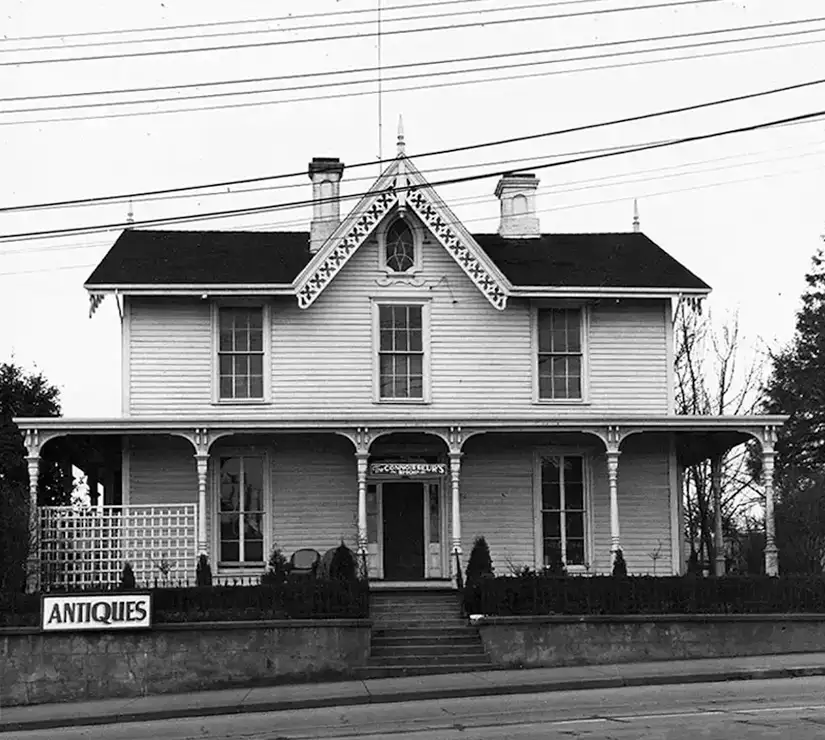
Wentworth Villa, built in 1863 for the Ella family, was at the time the largest residence in Victoria. It was constructed almost entirely of California redwood shipped from San Francisco. Now one of Victoria’s oldest surviving homes and a designated heritage building listed in the register of Canadian Historic Places, the Villa’s story is closely tied to that of the Ellas, its original inhabitants. Our exhibits explore their life at the Villa, and the historic artifacts that capture the material culture of a prosperous Victorian family.
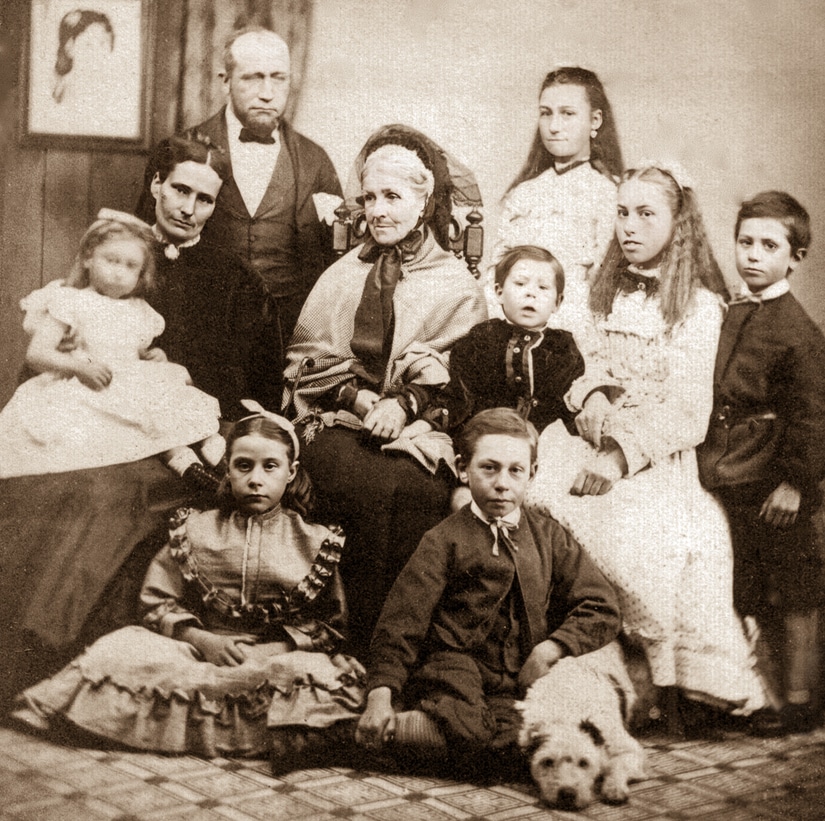
The Ellas
Henry Bailey Ella was born in England and joined the Hudson’s Bay Company in 1846 at age 20. The following year he sailed for Vancouver Island as second mate on the ship Mary Dare, and Victoria became home port for his life-long career as a sea captain — one that took him to every HBC fort in the Pacific Northwest, as well as to Hawaii and back to England many times over.
Martha Beeton Cheney, also English, arrived in Victoria in 1851 aboard the Tory, accompanying her aunt and uncle, Thomas and Ann Blinkhorn, who had come to manage Bilston Creek farm in Metchosin. In the small, close-knit society of pre-goldrush Victoria, Henry and Martha soon met, and were married in 1855 in an outdoor ceremony at the Metchosin farm attended by Governor James Douglas himself. The couple went on to have seven children together.
Victorian Life
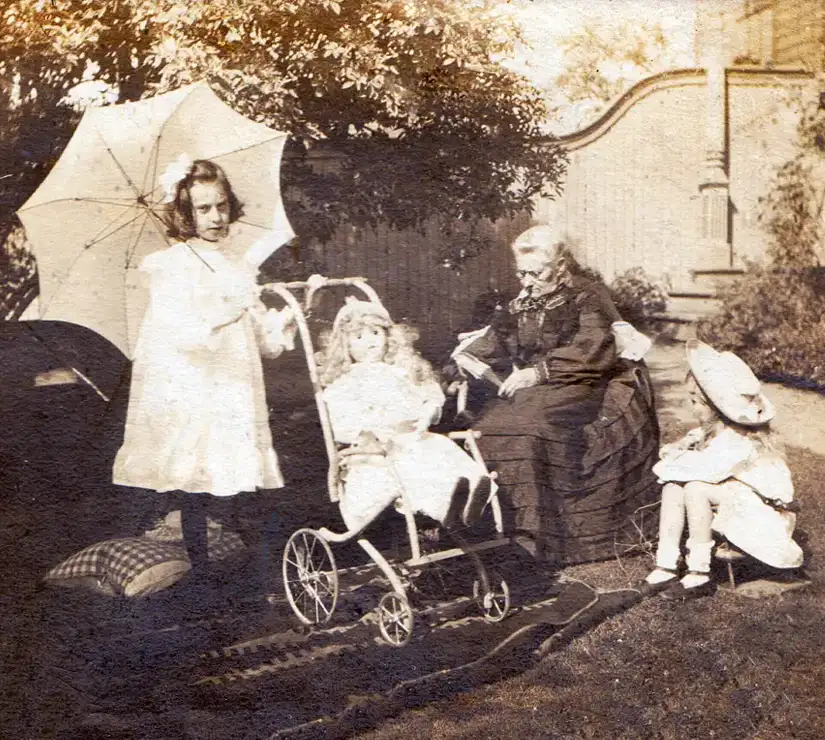
When the Ellas built their fine new home on Fort Street there were very few such spacious buildings in the colony and it soon became a centre of Victoria’s social life. Family documents reproduced in this exhibit give insight into this aspect of the history.
A glimpse into the material history of Victorian life at Wentworth Villa is also provided through displays of artifacts that were recovered from a long disused backyard rubbish pit unearthed during recent renovations. It is complemented by displays of lovingly maintained heirlooms handed down to modern day descendants of the Ellas. Together they give a colorful and tangible connection between the Victorian era and our own.
After the Ellas
After the accidental death of Captain Ella in 1873, the family fell on hard times which continued to deepen until the city took over the Villa for unpaid taxes. However, the last Ella siblings were allowed to remain in the building temporarily as tenants.
In 1940 a neighbouring antiques dealer named Faith Grant purchased the Villa by paying off 25 years of back taxes. Moving their “Connoisseur’s Shop” into the new premises, the Grants also added an extension in 1956 in which they lived. When the Villa was sold again in 2012, the original structure was thoroughly restored and re-opened to the public as a museum and the 1956 addition was rebuilt as a concert hall.