
FORT STREET
The story of Fort Street is as old as the city of Victoria itself. Originating as a cart track through the middle of Fort Victoria, it has evolved into one of the main corridors through the city and a dynamic repository of local architectural heritage. This exhibit considers some of the touchstones of that heritage and situates it within the broader cultural history of Victoria.
Beginnings
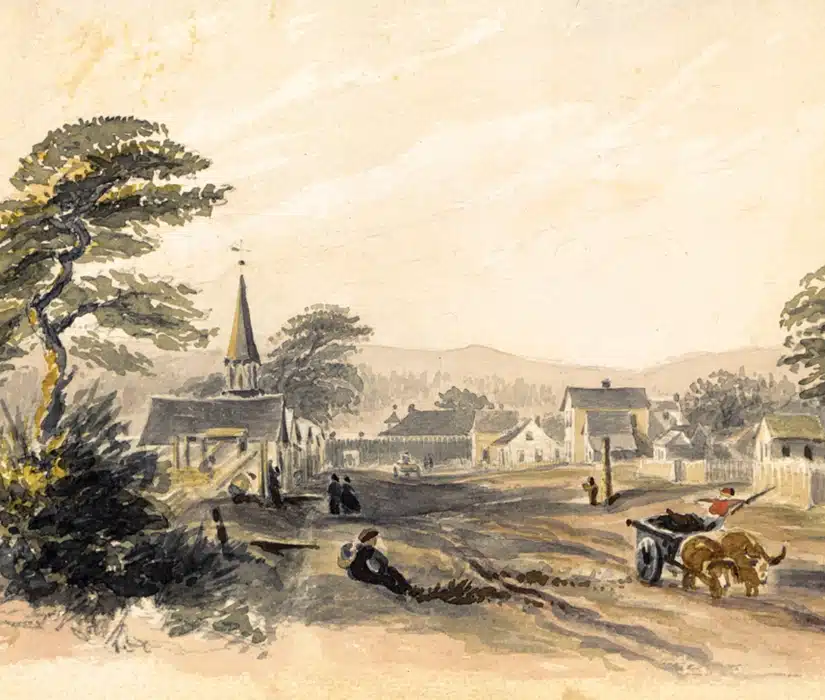
When Fort Victoria was established in 1843 it was designed first and foremost to have easy access to two main features of the local landscape: the harbour and the surrounding arable meadowlands. The latter of these, the open meadows which had been cultivated and maintained by local First Nations Peoples for millennia, offered some of the most practical land in the region on which to lay out a settlement that would later become a network of streets for wheeled vehicles to move about. With this objective a track was developed from the waterfront, through the centre of the Fort, and out its back side into the fields. This track soon became known as Fort Street.
Taking Shape
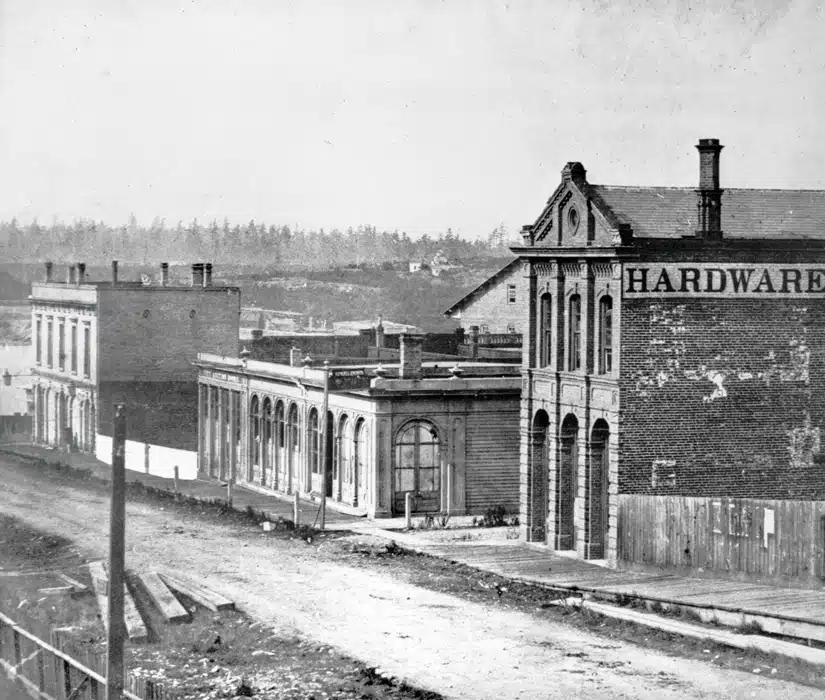
The dramatic increase in Victoria’s population following the Gold Rush of 1858 led to a rapid development of businesses and residences along Fort Street. Some of the first masonry buildings in the city were built by merchants at the foot of the street to provision the gold seekers who both arrived and departed for the gold fields from that point. Associated businesses like banks, hotels and taverns soon followed and wooden boardwalks were constructed to connect them. Social and fraternal organizations were also established and meeting halls built including that for the International Order of Odd Fellows at the corner of Wharf Street, one of the oldest buildings still standing on Fort Street (pictured at left, circa 1863).
Antique Row
Modern Fort Street
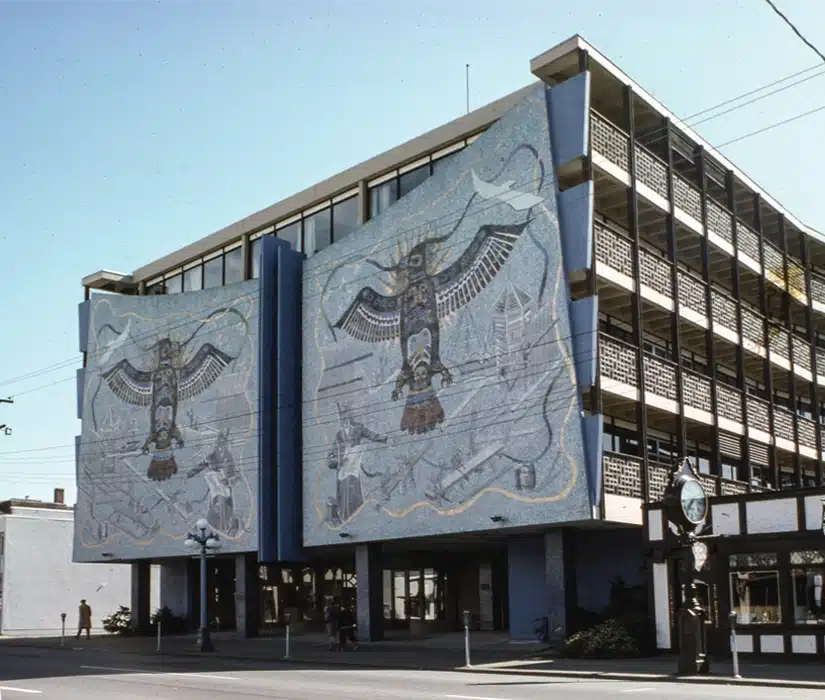
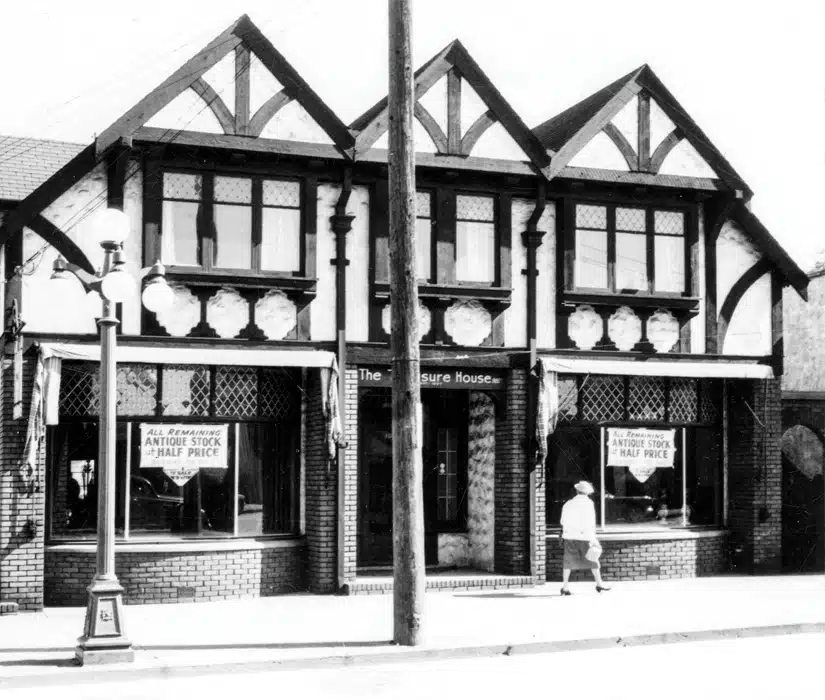
At the same time changing international tastes for architecture following World War Two led increasingly to developments of a very different sort. This is perhaps best represented on Fort Street by local architect John Di Castri’s bold modernist design for the Royal Trust Building (Built 1957, pictured right) which replaced one of the Tudor Revival antique stores at that location. These and many other architectural developments combine to add an eclectic and vibrant character to Fort Street’s distinct look and feel. Together they comprise the unique story of Victoria’s first street.